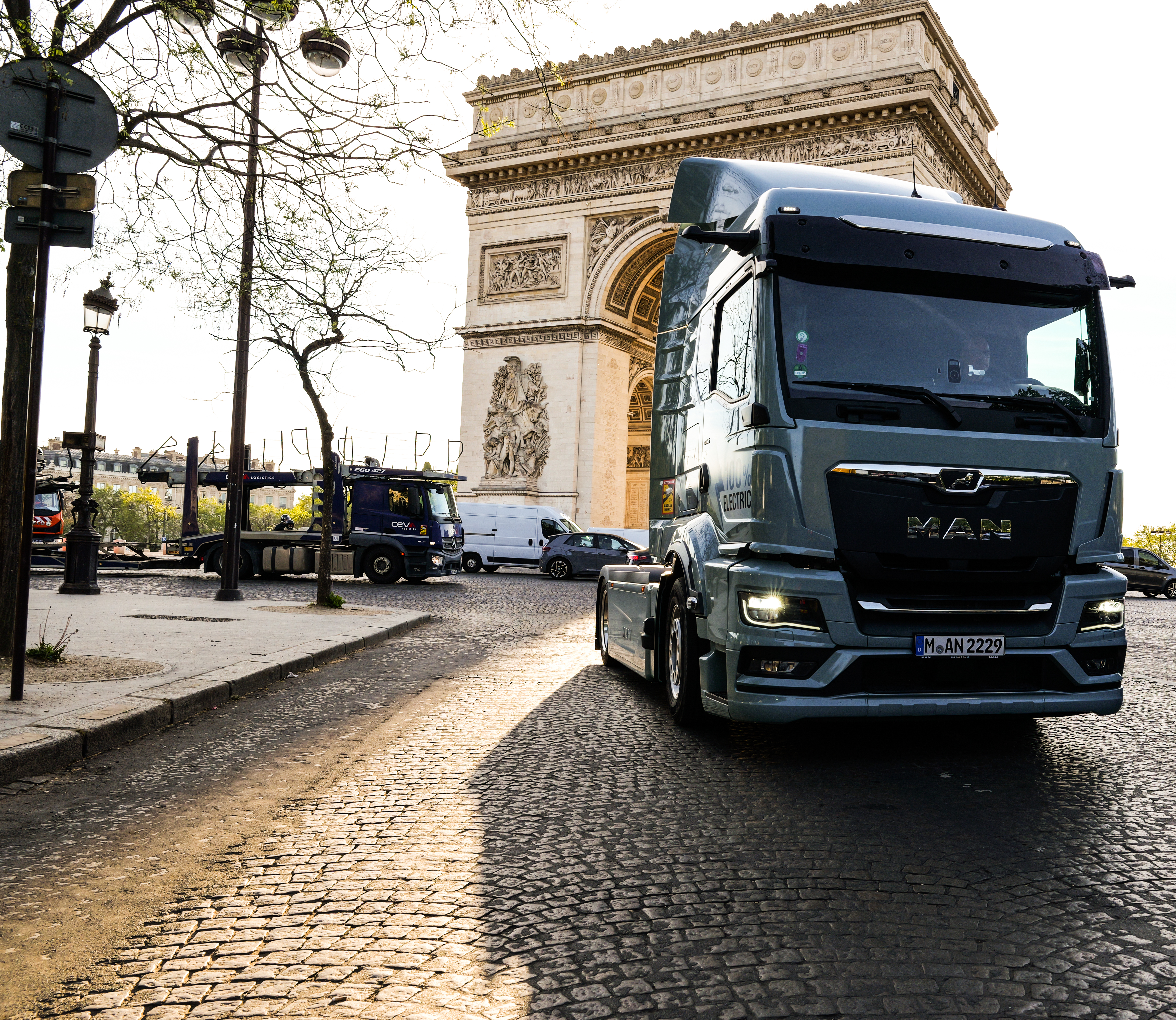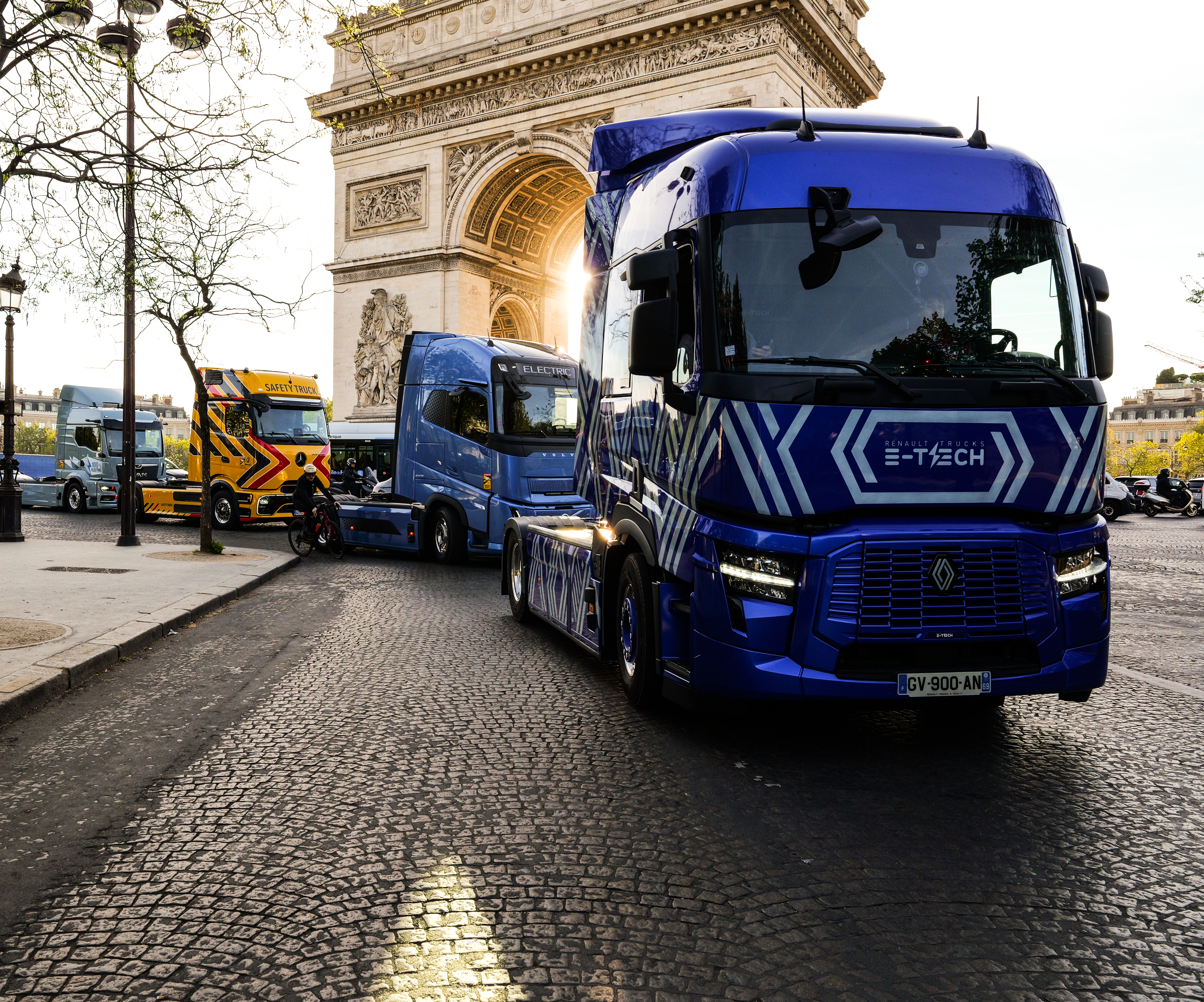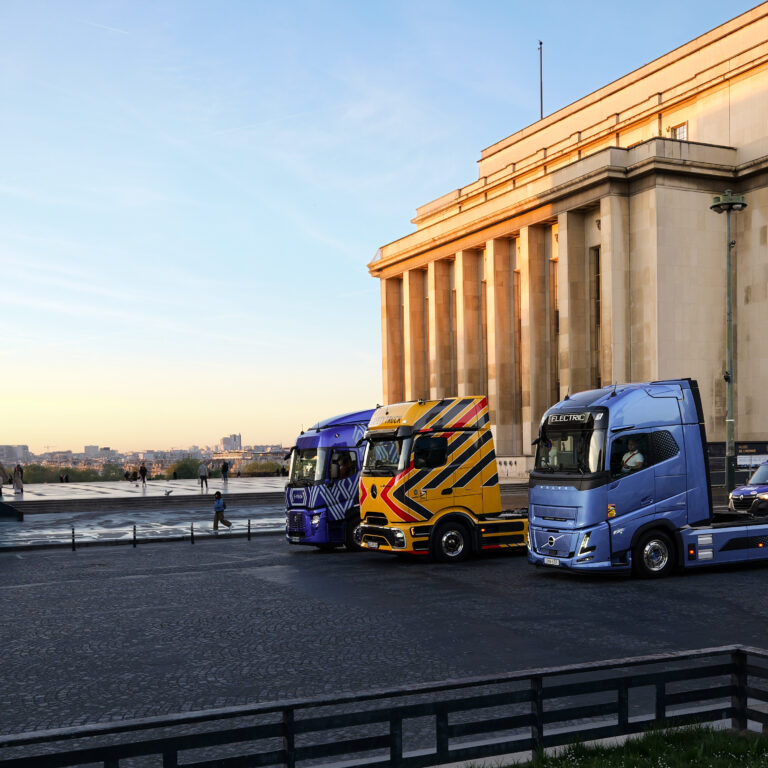
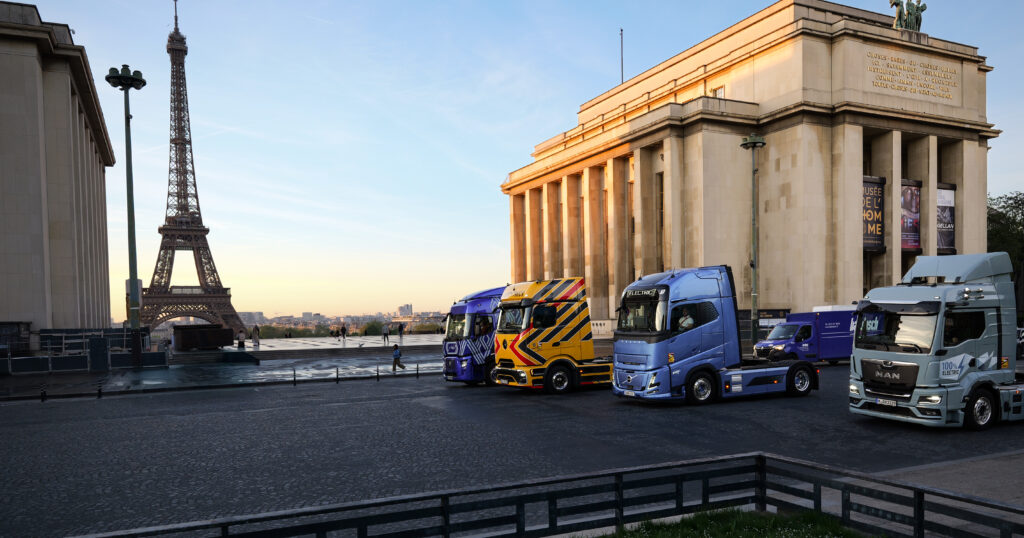
- Milence drives a 1,000 km all-electric route from Paris to Berlin with vehicles from Daimler Truck, MAN, Volvo Trucks and Renault Trucks
- Demonstration highlights economic viability, sustainable impact and the role of clean transport corridors in strengthening Europe’s energy security
- Tour brings industry and policymakers together to look at the positive use cases and address the barriers to scaling zero-emission freight
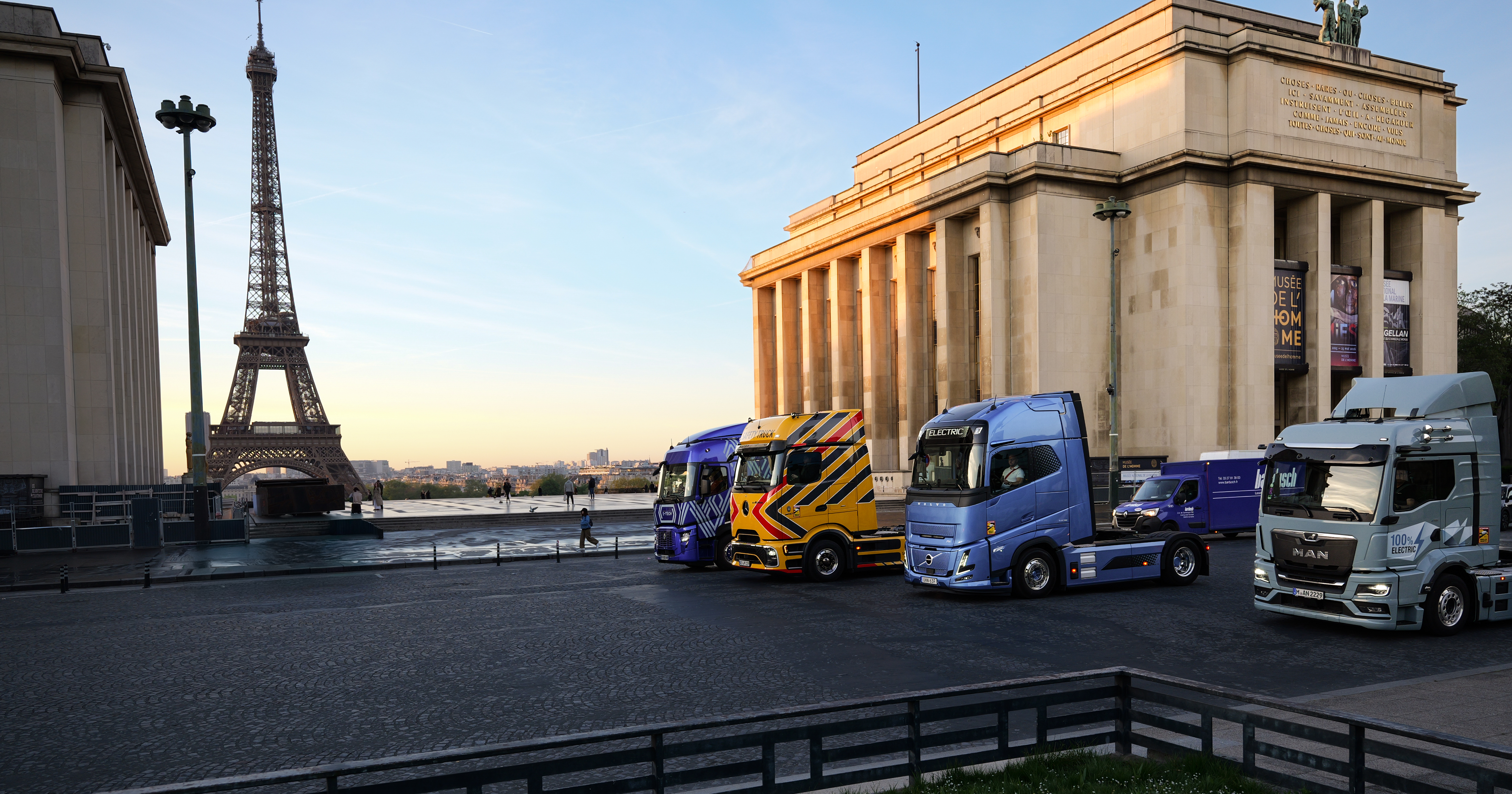
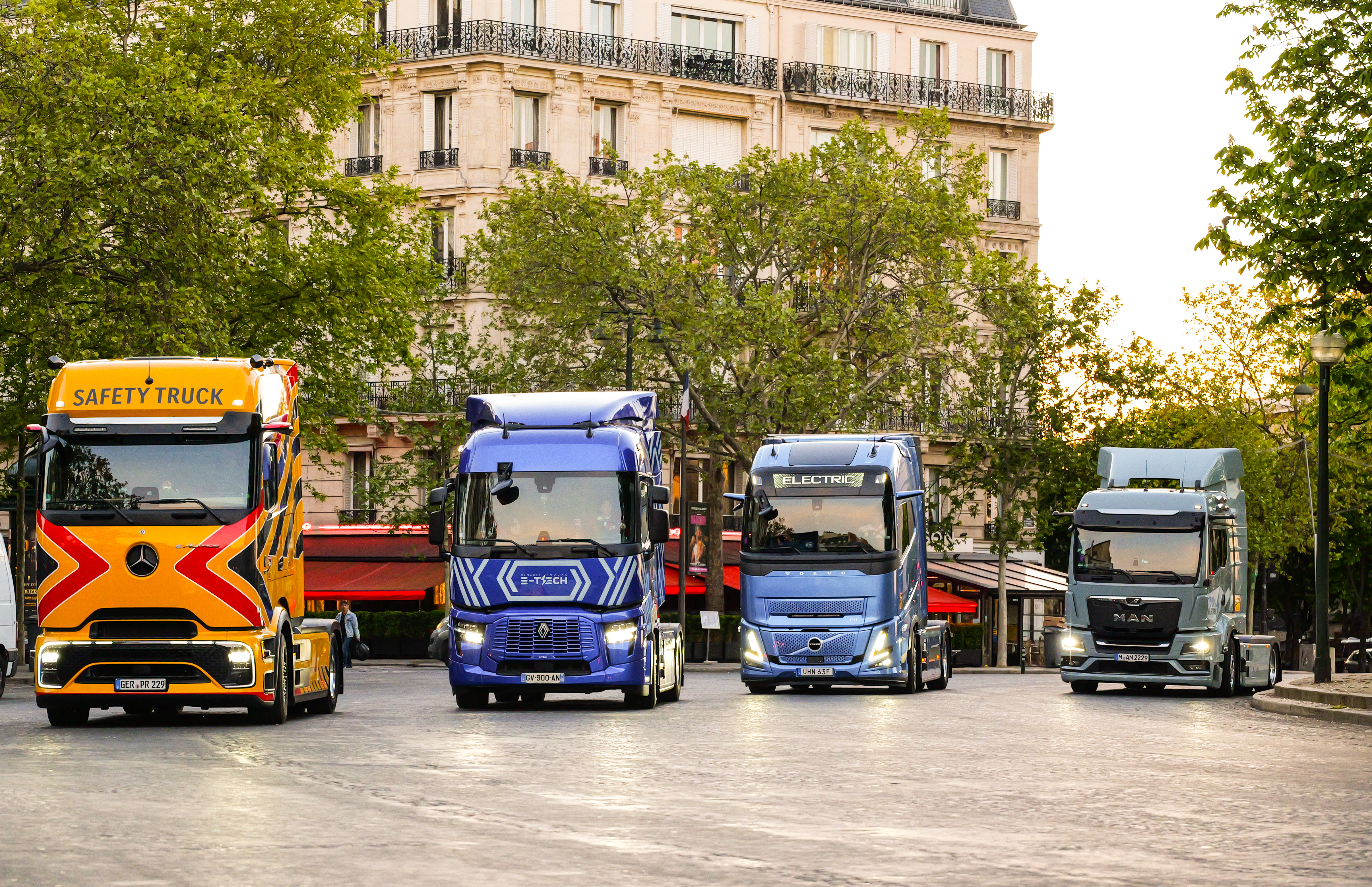
Paris, France / Amsterdam, Netherlands – April 15, 2026 – Milence, the joint venture between Daimler Truck, TRATON GROUP and Volvo Group, has launched a cross-border initiative together with key industry stakeholders to demonstrate that electric road freight is an operational and economically viable reality for Europe.
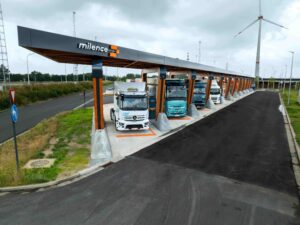
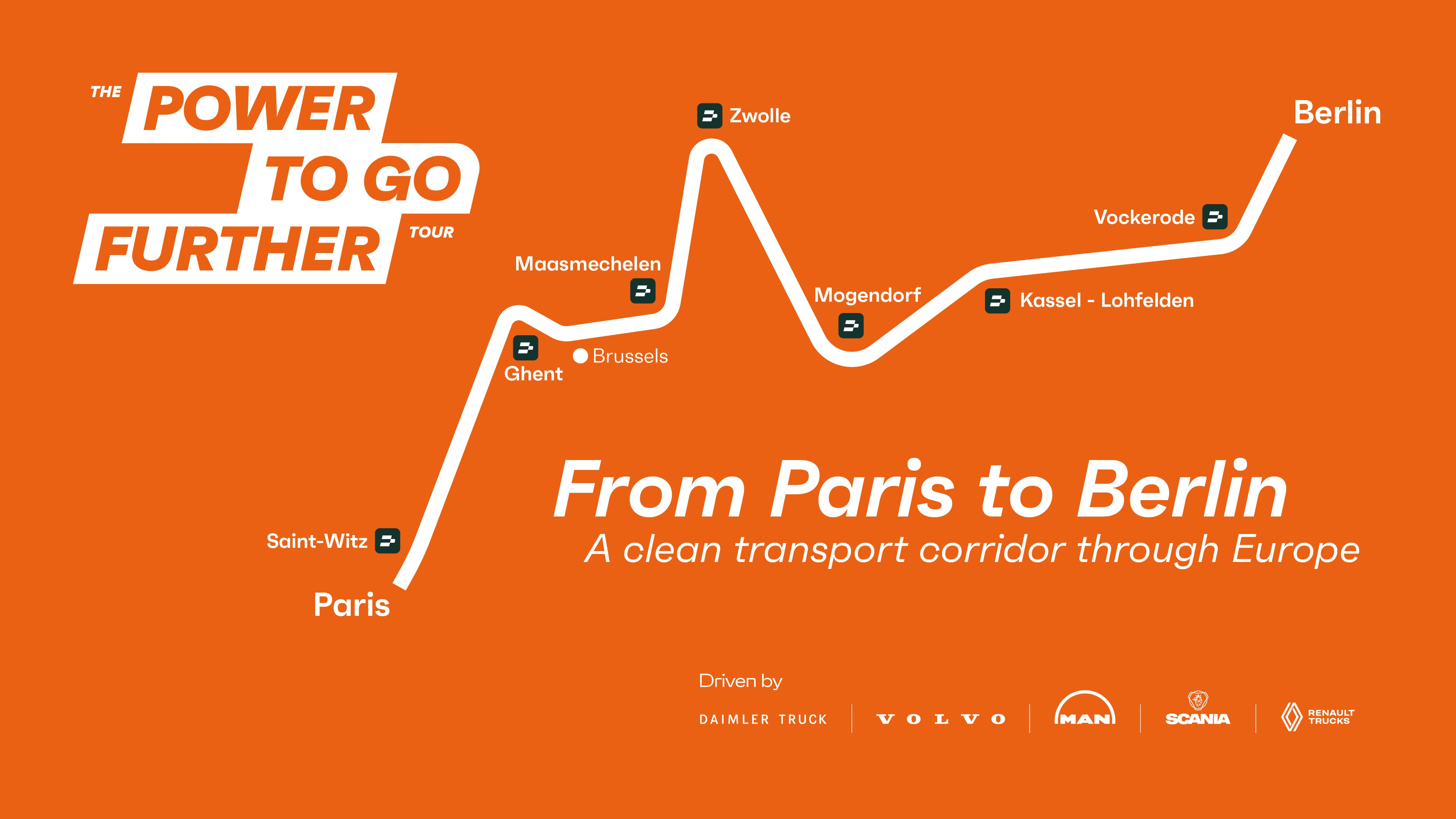
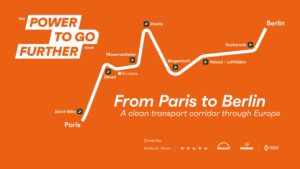
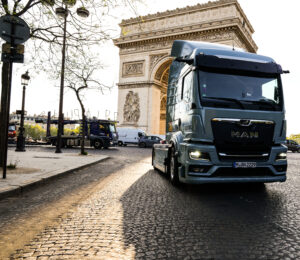
The Power to Go Further Tour will cover a 1,000 km journey from Paris to Berlin using battery-electric heavy-duty trucks and charging exclusively at Milence hubs in Saint-Witz (FR), Ghent (BE), Maasmechelen (BE), Zwolle (NL), Mogendorf (DE), Kassel-Lohfelden (DE) and Vockerode (DE) while showcasing one of Europe’s first fully operational clean transport corridors. Six of these hubs are co-funded by the European Union under the Alternative Fuels Infrastructure Facility (AFIF) call.
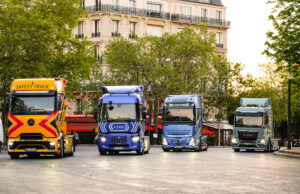
From 15 to 23 April, the convoy will be joined by additional trucks from leading transport companies operating under real conditions along the route, further demonstrating growing market adoption and building momentum for zero-emission freight.
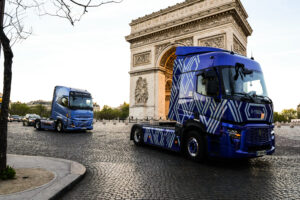
“The Power to Go Further Tour marks a milestone for Milence and for Europe’s energy transition. It demonstrates the impressive progress of electric road transport towards sustainable operations. Paris–Berlin is just one of many clean transport corridors that can already be operated fully electric and economically viable across Europe,” Anja van Niersen, CEO Milence said at the start of the journey in Paris.
Electrification, a response to Europe’s energy challenge
Recent energy price volatility has once again exposed Europe’s dependence on imported fossil fuels, increasing costs and uncertainty for transport operators. At the same time, electrification of heavy-duty road transport offers a direct response to both challenges. It reduces CO₂ emissions while enabling savings and more stable and predictable operating costs. As a result, it is becoming essential for Europe’s competitiveness, resilience, and energy security.
1,000 km proving economic and environmental performance
Across the full route, the tour demonstrates that electric freight is already a sustainable competitive alternative to diesel:
- Calculated operating costs per truck show €0.995 per kilometre for electric, compared to approximately €1.003 per kilometre for diesel.*
- Up 1,470 kg CO2 reduction at 0.9 kg CO2 / km diesel emissions/truck when powered by renewable energy.
These results show that electric freight can deliver both cost efficiency and significant emissions reductions on key European corridors.*
Electric long-haul freight is reaching a turning point
In line with the operational reality of this route, Milence’s latest total cost of ownership (TCO) analysis confirms that in leading markets, electric trucks can already compete with diesel under supportive conditions. Policy measures such as toll incentives and carbon pricing further strengthen the business case. Transparent pricing models, such as those offered by Milence and enhanced by volume agreements, provide cost predictability while supporting operators’ operational needs.
A Pan-European network enabling Europe’s electric corridors
Milence is building Europe’s largest public charging network dedicated to heavy-duty transport, enabling the development of the first clean transport corridors across the continent.
With 33 operational charging hubs across eight countries, key electric routes connecting major logistics hubs are already emerging, including Paris–Amsterdam, Barcelona–Lyon–Paris, Antwerp–Stockholm, and Berlin–Stuttgart, making sustainable long-distance road transport possible.
These corridors support reliable long-haul operations through high-power charging infrastructure. The rollout of Megawatt Charging System (MCS) technology, already available at the hubs in Antwerp (BE), Zwolle (NL) and Landvetter (SE) will further reduce charging times and enhance operational reliability.

Now is the time to scale
Despite this strong momentum, fragmented policies and uneven progress across countries continue to slow large-scale adoption. The business case is increasingly clear. The challenge now is scale. Accelerating deployment across borders will require coordinated action from all Member States, including supportive tolling regimes, stable incentives, faster permitting and grid connection reforms. Replicating what already works in leading markets will be key to accelerating deployment across Europe.
“Electric road transport is clearly becoming a reality. Charging infrastructure is developing in line with market demand, and electrification is increasingly driven by strong economics while supporting Europe’s energy resilience and strategic autonomy. Collaboration between industry and policymakers is essential to accelerate progress and turn today’s challenges into a strategic economic opportunity.” Anja van Niersen, CEO of Milence concluded.
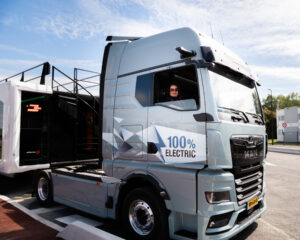
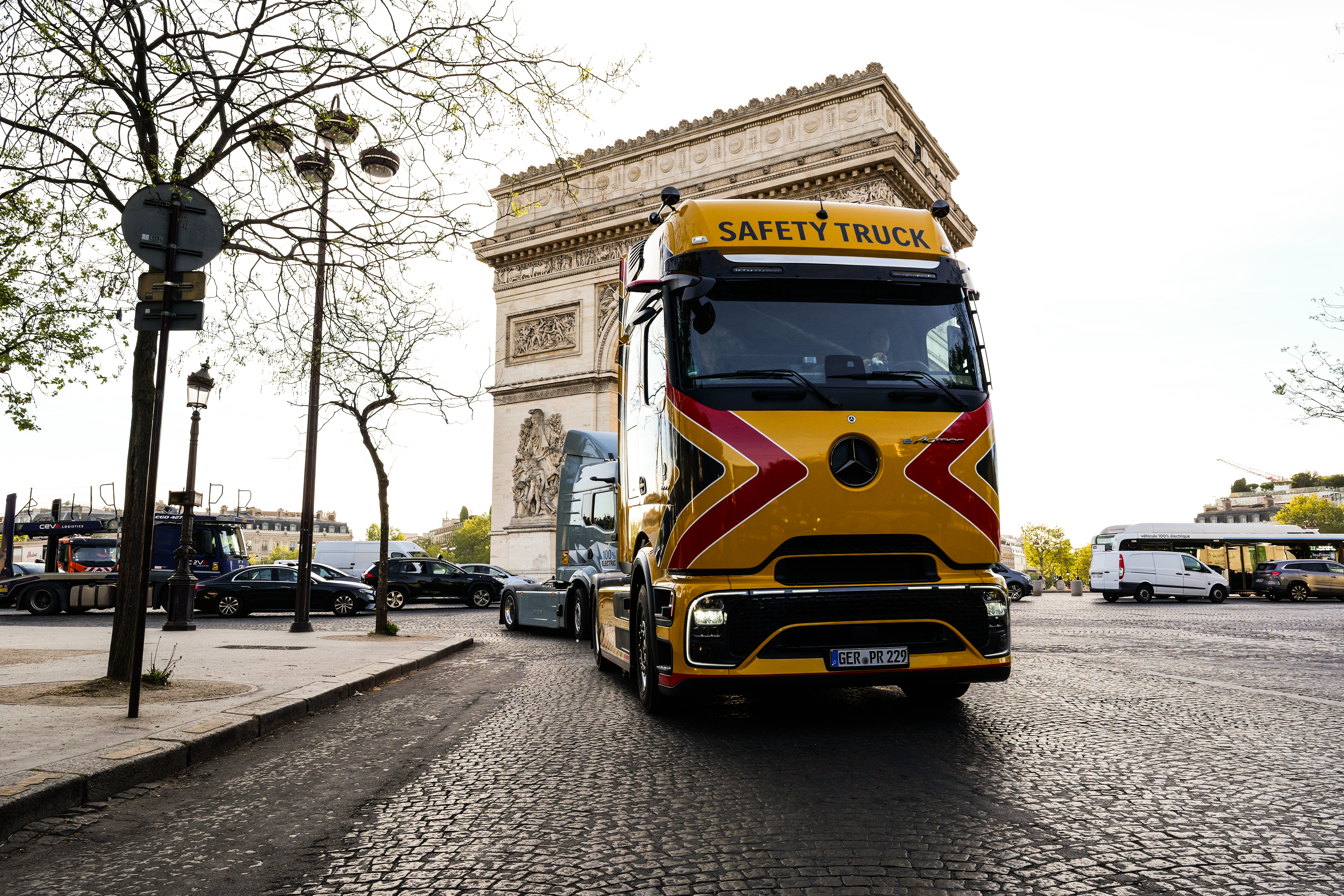
Achim Puchert, CEO Mercedes-Benz Trucks: “Across manufacturers, we are demonstrating that long-haul transport can be fully electric. The focus now is on expanding cross-border charging infrastructure and rapidly scaling transport corridors.”
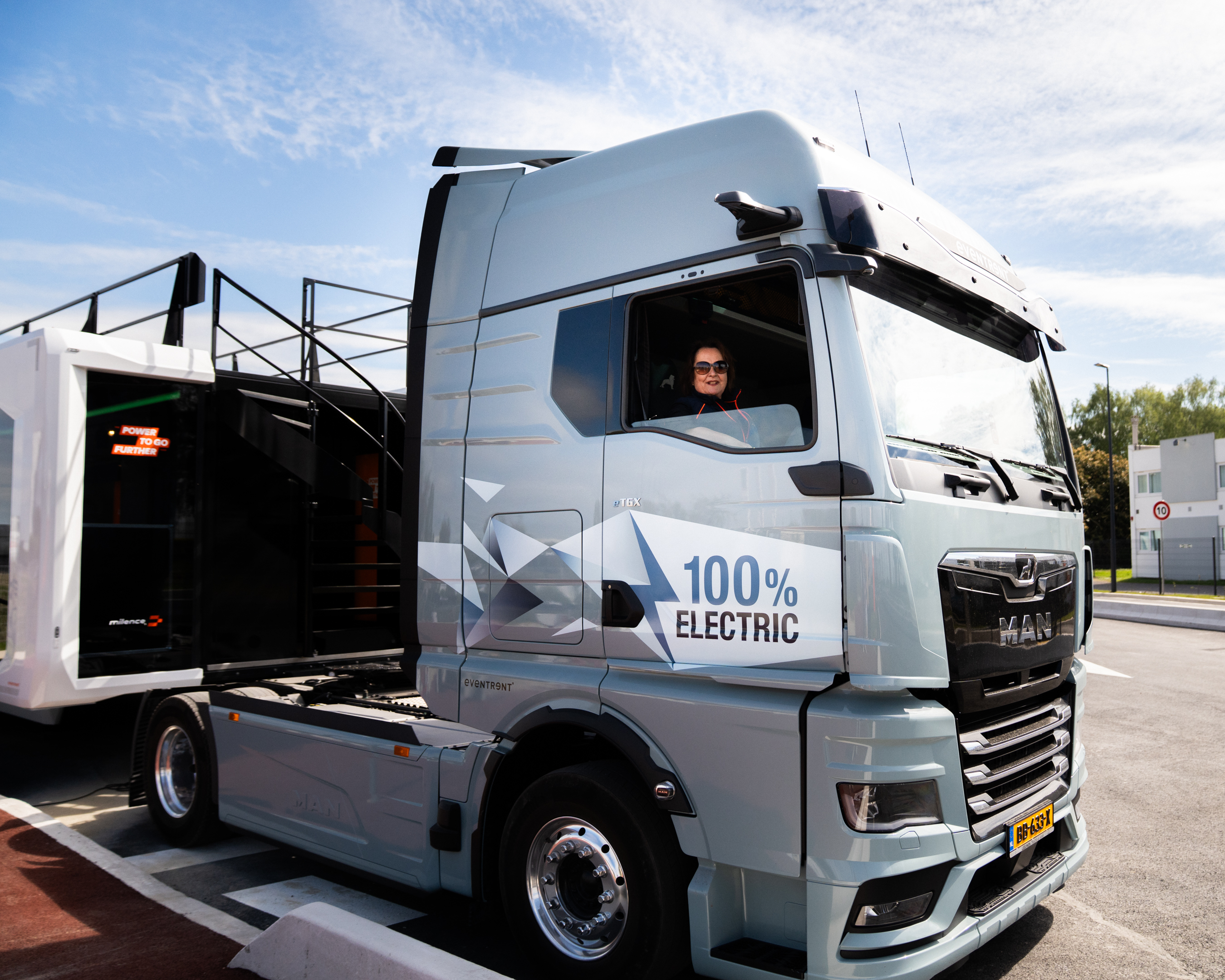
“The vehicles and services are ready, and now there is a need for an increased expansion of the public charging infrastructure throughout Europe. Milence is already making an important contribution to this, but other infrastructure providers and corresponding framework measures on the part of politicians are also essential for a rapid expansion of the charging network. The transition to electric mobility in road freight transport can only succeed if we work together,” says Friedrich Baumann, Member of the Executive Board for Sales & Customer Solutions at MAN Truck & Bus.
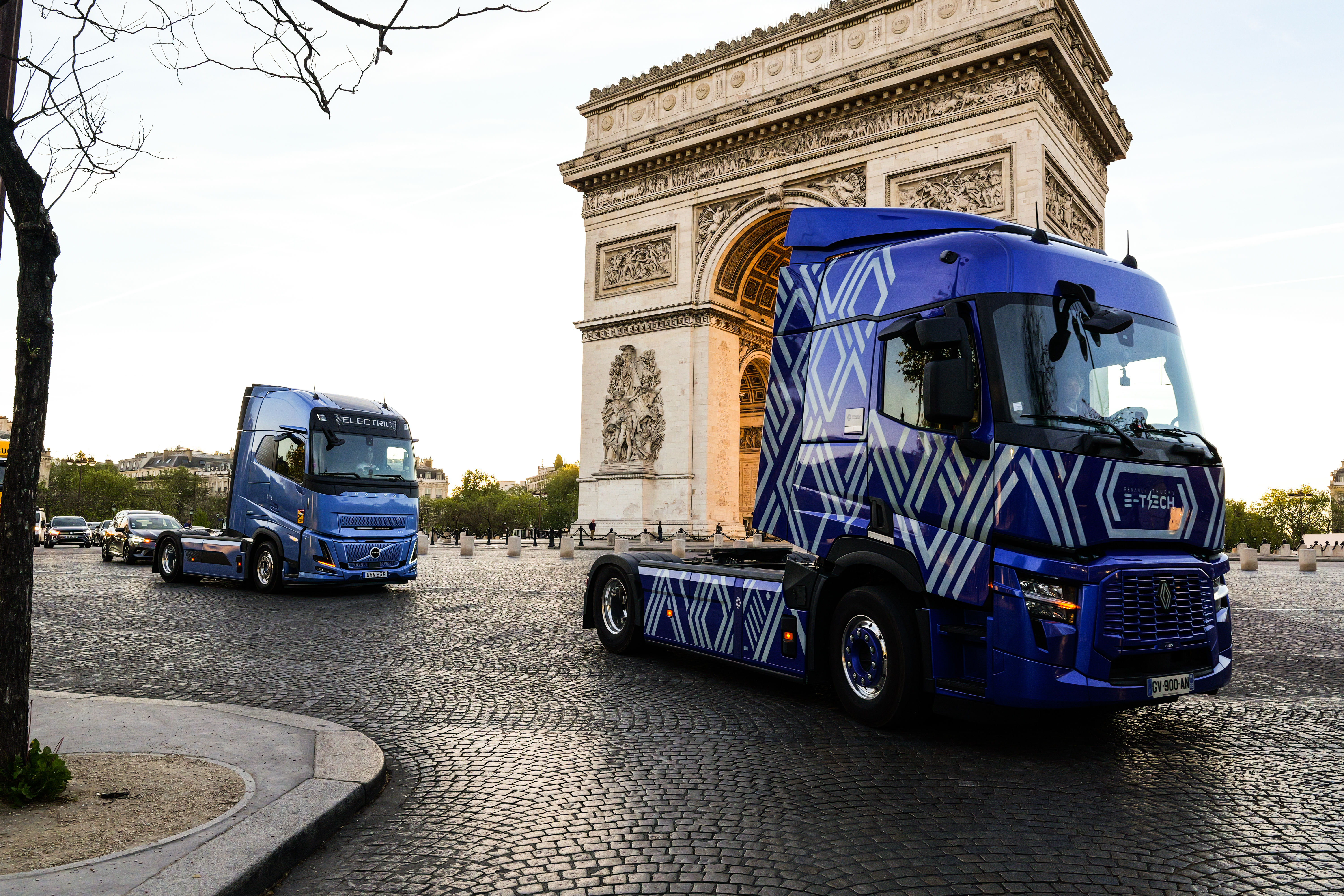
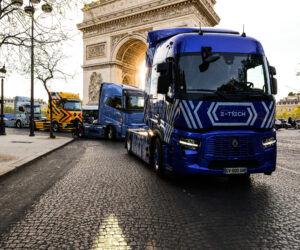
“Milence electric tour demonstrates that long-distance transport with electric trucks can be achieved and we are proud to contribute with two of our flagship models: Volvo FH Aero Electric and Renault Trucks E-Tech T. Volvo Group’s electric trucks have now collectively driven over 600 million kilometres, a testament to the consistent investments we have made over many years to accelerate the transition to sustainable transport. While we recognize that further expansion of charging infrastructure and alternative driveline solutions remains essential, this tour is a clear proof point of Volvo Group’s commitment in leading the transformation towards zero-emission transport.” Magnus Broback, Head of Charging & Infrastructure Solutions, Volvo Group.
*Disclaimer – The cost comparison is based on a scenario that includes depreciation costs as well as the following key assumptions: Approximately 97.5% of the distance is driven on toll roads. Full reliance on public charging infrastructure. Upcoming Vrachtwagenheffing effective July 2026 was included. Diesel vehicles are assumed to refuel at each stop as well, ensuring a 1:1 energy cost comparison.