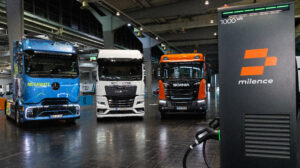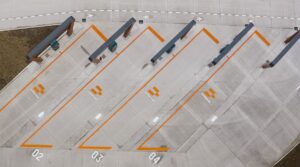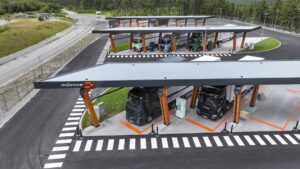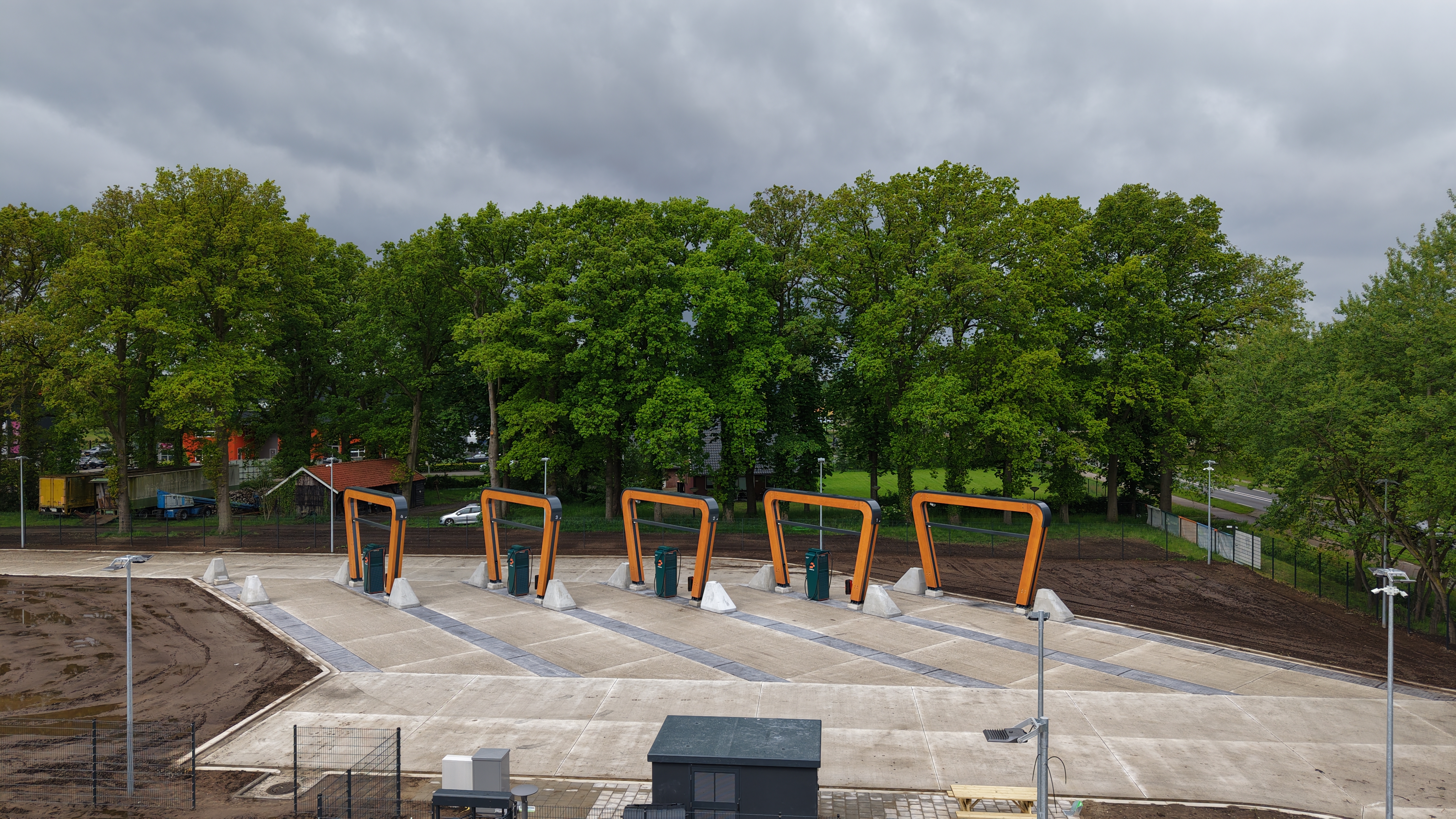
- The new charging hub in Deurningen-Hengelo is the first Milence location to be constructed using zero-emission construction equipment, demonstrating how charging infrastructure can be delivered in an even more sustainable way.
- Located along the A1 motorway, the hub strengthens the North Sea–Baltic TEN-T Corridor and demonstrates how Milence is not only enabling fossil-free road transport but also making the development of charging infrastructure more sustainable.
Amsterdam, Netherlands – July 15, 2026 – Milence is taking the next step in the sustainable development of charging infrastructure with the opening of its first charging hub constructed using electric construction equipment. The new site in Deurningen-Hengelo is Milence’s fourth charging hub in the Netherlands and further strengthens the European network along the North Sea–Baltic TEN-T Corridor.
The transition to fossil-free road transport does not begin when an electric truck plugs in for the first time; it starts during the construction of the infrastructure itself. With the development of the new charging hub in Deurningen-Hengelo, Milence demonstrates how sustainability can be integrated into every stage of the construction process. Through the use of electric construction equipment, smart construction logistics and innovative materials, Milence is taking another step towards making the rollout of public charging infrastructure for battery-electric heavy-duty vehicles more sustainable.
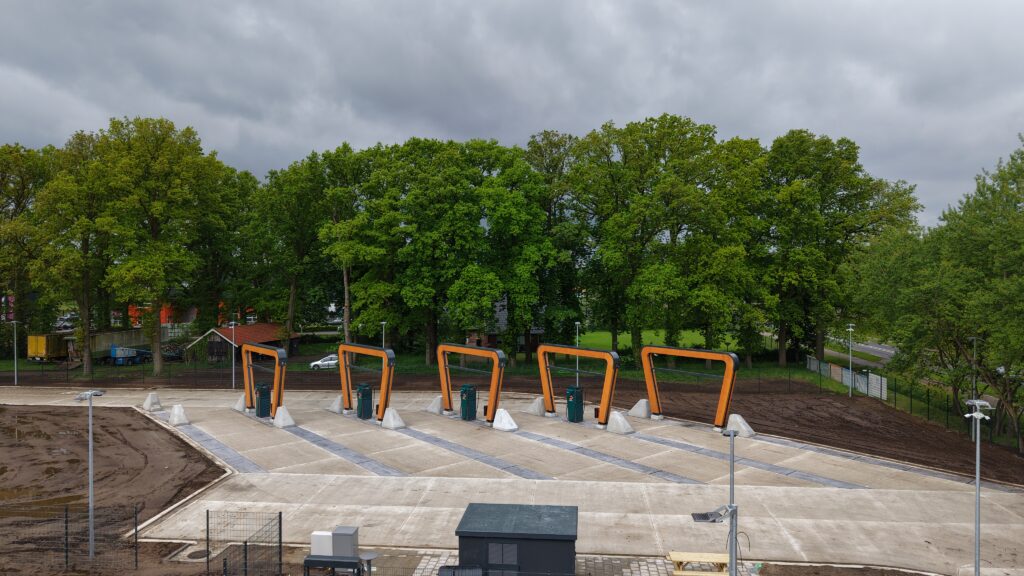
Strategically located along the A1 motorway, the charging hub represents an important addition to Milence’s growing European network. The site connects key logistics routes between Germany, the Netherlands and Belgium, further enabling cross-border electric freight transport. Located at the well-known Frans op den Bult truck stop, drivers benefit from secure parking, high-quality facilities and a trusted place to rest.
A practical example of low-emission construction
The construction of the Deurningen-Hengelo charging hub served as an important test case for the use of electric construction equipment in the development of public charging infrastructure. By gaining practical experience with planning, logistics and charging electric machinery, Milence has gathered valuable insights that can be applied to future projects whenever site conditions or project requirements call for it.
The use of electric construction equipment required careful planning of construction activities, charging schedules and on-site logistics. Deurningen-Hengelo therefore served as an important practical example in which Milence, together with its construction partners—including Hoogeboom, supplier of the electric construction equipment—gained first-hand experience with both the opportunities and challenges of zero-emission construction. The lessons learned from this project can be applied to future sites where similar conditions or sustainability ambitions exist.
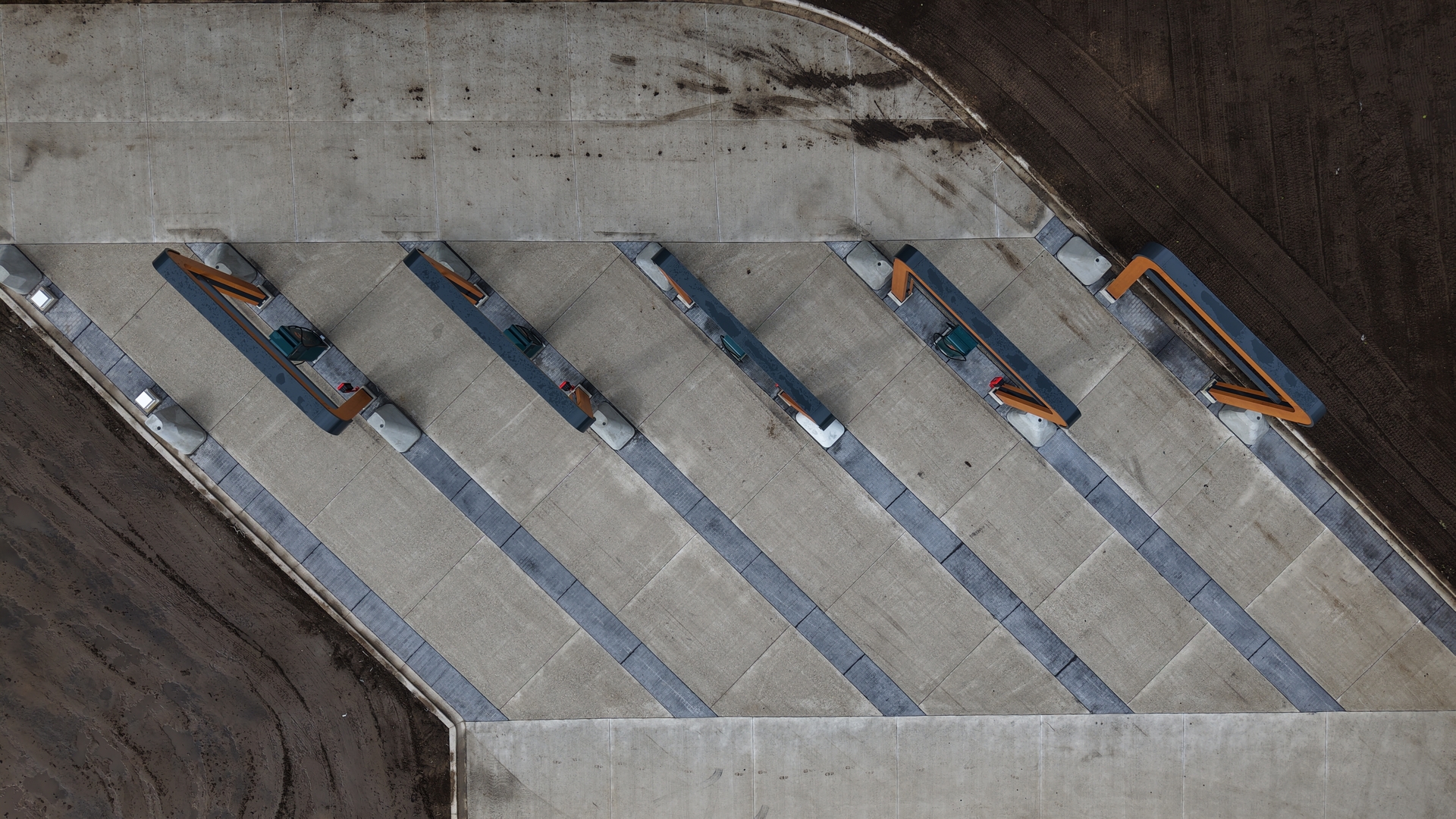
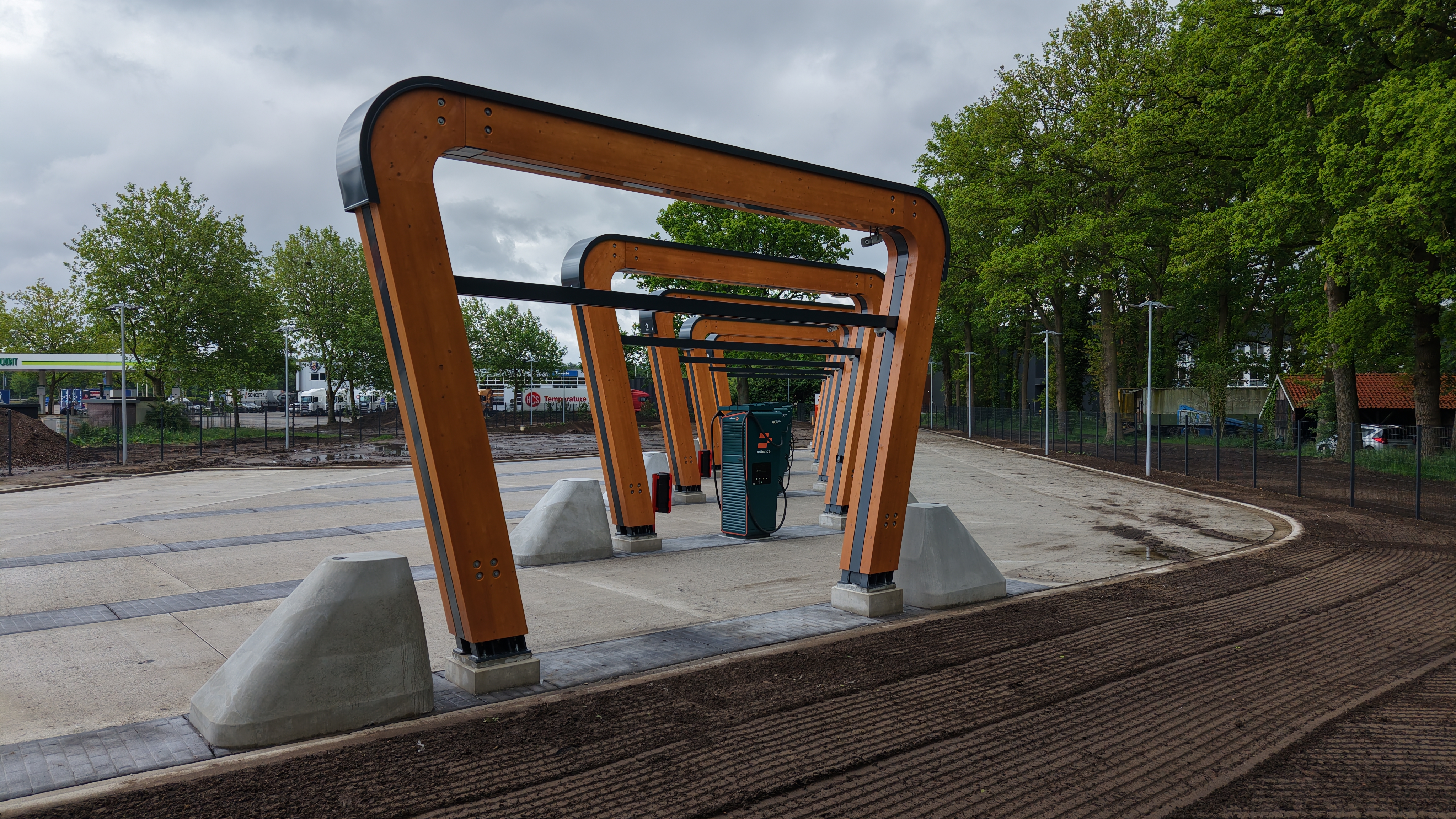
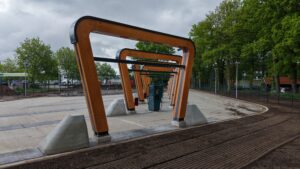
In addition to using electric construction equipment at this site, Milence consciously selects more sustainable building materials for all of its charging hubs. The distinctive Milence arches and canopies are manufactured from fully PEFC-certified timber, helping to significantly reduce the carbon footprint of the structures compared with conventional building materials.
Below ground level, innovative solutions have also been implemented. The foundations of Milence charging hubs use fiber-reinforced concrete and glass fiber dowels, reducing the need for traditional steel reinforcement without compromising structural integrity. Together, these material choices further reduce the environmental impact of the construction process.
A trusted stop, ready for the future
The new charging hub has been developed at Frans op den Bult, a well-known truck stop that has served international truck drivers for generations along the A1 motorway. By combining high-power charging infrastructure with existing amenities—including a restaurant, sanitary facilities and secure parking—drivers can make the most of their mandatory rest periods. This combination of charging, rest and services reflects Milence’s ambition to deliver not only reliable charging infrastructure, but also the best possible driver experience.
“For two hundred years, Frans op den Bult has been a meeting place for drivers on the road. Together with Milence, we are building on that legacy while preparing our location for the future of road transport. Drivers will find everything they need here to recharge themselves as well as their vehicles, allowing them to continue their journey safely and comfortably,” says Pauline Scholten-Hellegers, owner of Frans op den Bult.
“Sustainability is the driving force behind everything we do at Milence. Our mission is not only to accelerate the transition to electric road transport and provide drivers with the best possible charging experience, but also to ensure that we develop our infrastructure in the most sustainable way possible. From the very beginning, we looked at the materials we use and how we could make the construction process smarter, more efficient and with the lowest possible carbon footprint. Deurningen-Hengelo is an important practical example that demonstrates how also a more sustainable approach to construction can be achieved. The insights gained from this project will help us develop future charging hubs that are even more efficient, consistent and future proof,” says Maarten Jaspers, COO of Milence.
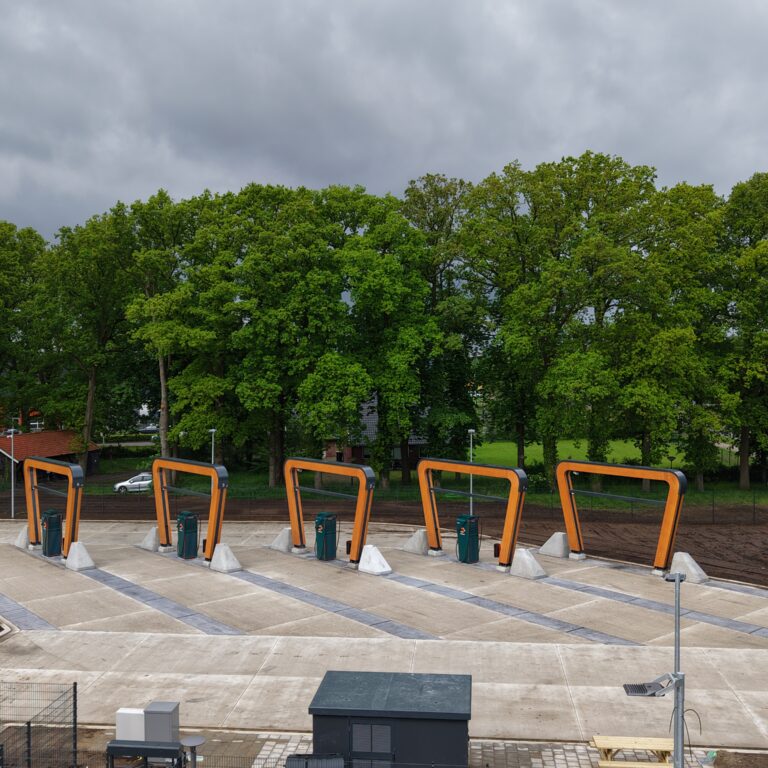
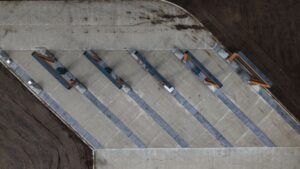
The new hub features five charging bays powered by 400 kW CCS chargers and represents another important milestone in Milence’s corridor-first strategy, bringing reliable public charging infrastructure to Europe’s busiest freight corridors first. Like other Milence locations, the hub has been designed with future expansion in mind, allowing charging capacity to grow in line with increasing market demand for electric freight transport.
More details about the construction of the Deurningen-Hengelo charging hub is available in the video HERE.
Disclaimer: “Building with zero-emissions” refers solely to direct on-site emissions associated with the construction of this charging hub. Electrically powered equipment and vehicles were used for all on-site construction activities, as well as extensively for the delivery of materials and equipment.